import Callout from "@/components/blog/Callout";
Securing the Controls: How Venko Enforces SOC2-Ready Identity and MFA Safeguards
Securing cross-border B2B coordination requires more than cryptographically signed transactions; it demands bulletproof operational boundaries. While Venko acts strictly as a non-custodial coordination layer, the administrative controls, approval mechanisms, and gateway configurations that drive our platform must be protected from unauthorized access. This briefing outlines how the Venko Admin Core implements institutional-grade identity lifecycles, frictionless Multi-Factor Authentication (MFA), and real-time rate limiting to ensure SOC 2-level operational integrity.
1. Where this shows up in the portal
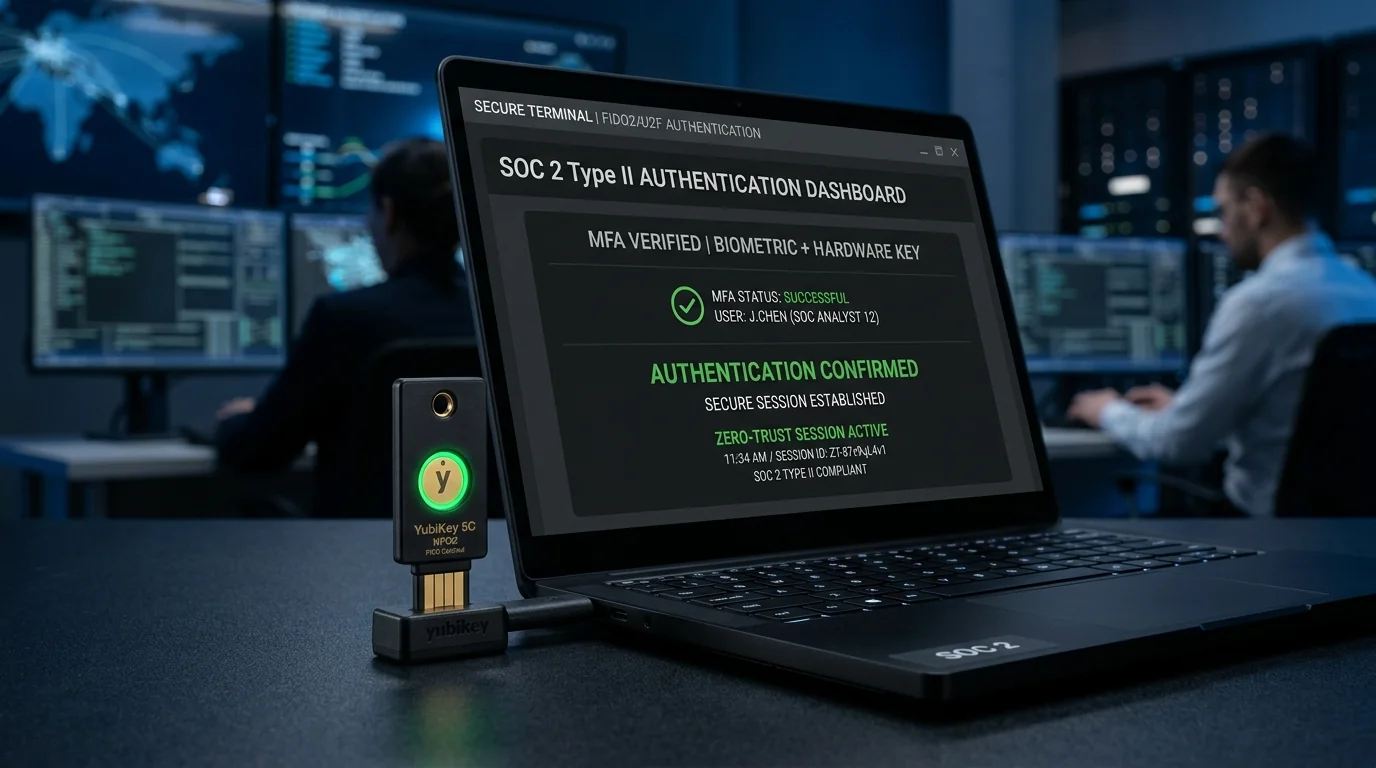
This topic relates directly to the [Admin Dashboard] login screen (`/portal/admin/compliance`) and the [Security Settings] portal. When a compliance officer logs in, completes a Maker-Checker verification, or updates their authentication parameters, the portal executes these safeguards in real-time.
2. The pain it addresses: Credential Compromise and Operational Friction
For institutional treasury desks, public organizations, and sovereign entities, operational platform security presents a two-fold challenge: preventing credential attacks while avoiding administrator onboarding bottlenecks.
- The Threat of Privilege Escalation: Standard administrative portals are primary targets. If an administrative credential is leaked or bypassed, unauthorized users could manipulate corridor boundaries, bypass Maker-Checker checks, or intercept audit pipelines.
- The Onboarding Bottleneck: Demanding high security often introduces significant friction. If MFA enrollment is buggy (such as authenticator apps failing to scan keys due to trailing characters), operators will bypass controls or delay critical verification steps.
3. How Venko's portal behaves: Zero-Trust Identity Lifecycles
Venko resolves these challenges by automating security lifecycles and eliminating technical friction at the user interface level.
When administrative personnel manage or access the platform, the system coordinates three key defenses:
- Stateful Onboarding: When a new admin account is provisioned, the portal places it in a restricted `Pending Activation` state. On initial login, the platform intercepts the session, issuing a temporary JWT (`FORCE_RESET`) that locks down all navigation until the administrator resets their password to NIST-800-63B standards and registers their physical authenticator key.
- Frictionless Key Matching: The portal cleans and filters Base32 seed keys, stripping any trailing equal-sign padding (`=`) that causes compatibility errors in Google Authenticator or Microsoft Authenticator. This guarantees a seamless, first-time scan.
- Automated Rate-Limiting: The API gateway continuously monitors login queries. If an email address experiences repeated failures, the portal locks down access at the system level before the authentication module even processes a query.
4. What controls are in place behind the scenes
The Brute-Force Mitigation Guarantee: Rates are monitored in memory using composite keys: ${clientIp}:${normalizedEmail}. This dual-key binding shuts down distributed attacks targeting a single account, as well as high-volume credential stuffing from a single IP.
- Zero-Trust Finite State Machine (FSM): Administrator accounts follow a strict transition lifecycle (Created ➔ ForceReset ➔ Active ➔ Locked). Transitions are recorded under the `AUTHSTATECHANGE` audit log.
- Composite Rate Limiting: Attempts are capped at 5 failures within a rolling window. Upon trigger, the IP/email combination is locked for 15 minutes, returning a `429 Too Many Requests` code.
- Cryptographic Logs: Administrative actions (logins, MFA enrollment, lockouts) are logged to the relevant regional compliance enclaves (Frankfurt / São Paulo / Virginia) according to tenant profile.
5. What this means for your organization
- Uncompromised Security Gates: Your administrative panels are secured against automated brute-force attacks and credential compromise.
- Smooth Institutional Onboarding: Your compliance and audit operators onboard without friction, reducing technical support burdens.
- Auditor-Approved Controls: The stateful FSM and composite lockout mechanisms satisfy strict SOC 2 CC6.3 trust principles, making due diligence reviews painless.
6. How the technology enforces these rules (for your technical team)
For engineering and integration SRE teams, Venko controls administrative access through strict gateway rate limiters and clean secret serializations.
The TOTP keys are stripped of padding characters prior to presentation:
```typescript
// Strips trailing '=' to prevent authenticator app errors
const cleanSecret = rawSecret.replace(/=+$/, "");
```
Lockout decisions are written securely within the authentication interceptor:
```typescript
if (failedAttempts >= 5) {
logSecurityEvent({
event: "AUTHLOCKOUTTRIGGERED",
actor: email,
ip: clientIp,
durationMinutes: 15
});
return response.status(429).json({ error: "Access temporarily suspended." });
}
```
Legal Disclaimer: Venko Total Group (VTG) operates strictly as an advanced coordination software platform. Venko does not act as a commercial bank, money transmitter, custodian, or investment broker.
These robust protections ensure that your B2B operations and escrows proceed in a safe, controlled, and audit-ready environment.